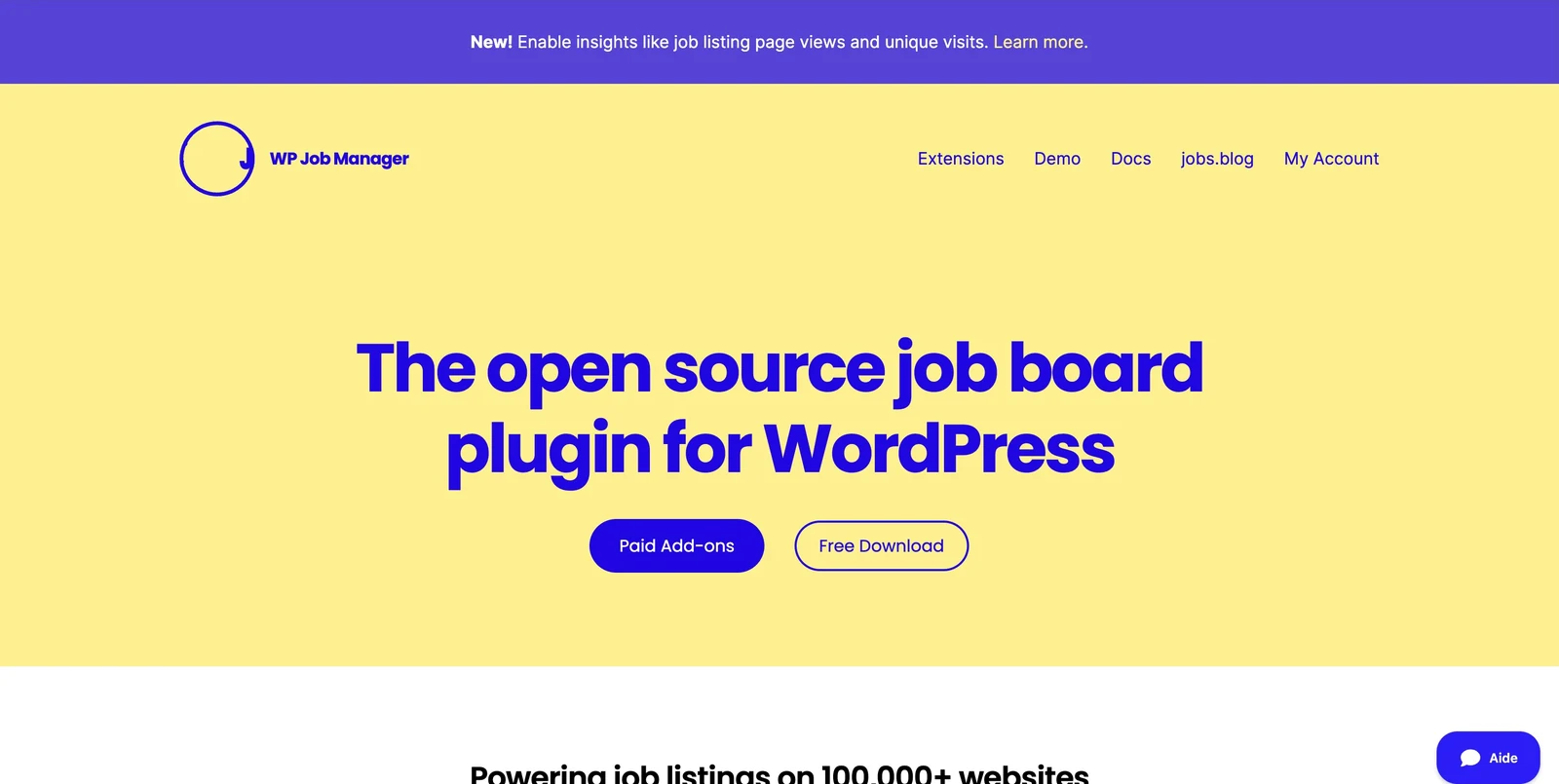
An existing WordPress publication can add vacancies without moving its editorial operation to another platform. WP Job Manager supplies the job listing functionality, while the site’s theme and wider WordPress setup determine how that section fits into the rest of the website.
The plugin introduces structured job records and searchable listings. Employers can submit and manage vacancies through frontend forms, and administrators can review content in the WordPress dashboard. This separates the public submission experience from the administrative work of checking descriptions, organising categories and keeping the catalogue relevant. Shortcodes allow job listings to be placed within the site’s pages. Its open-source structure is useful when a board needs adjustments beyond the default presentation. Developers can work with templates, post types and endpoints to connect job content with the surrounding website. A publication serving a particular profession, for example, can develop a presentation that reflects its own terminology and editorial approach.
The extension ecosystem is another part of the product’s role. Additional recruitment functions can be introduced through compatible add-ons, making the exact feature set dependent on the chosen configuration. Planning the submission, application and moderation journey is therefore part of setting up the board.
The distinction between a job record and an ordinary article also gives editors a clearer content model. A vacancy has its own structured information and browsing context, while the publication’s articles remain available to explain the profession or sector. For established communities, this can make the board feel like a connected service within the website readers already know.
WP Job Manager is particularly relevant to operators who already maintain WordPress and want job publishing to become another part of that site, with the flexibility and ongoing maintenance responsibilities of a plugin-based setup.