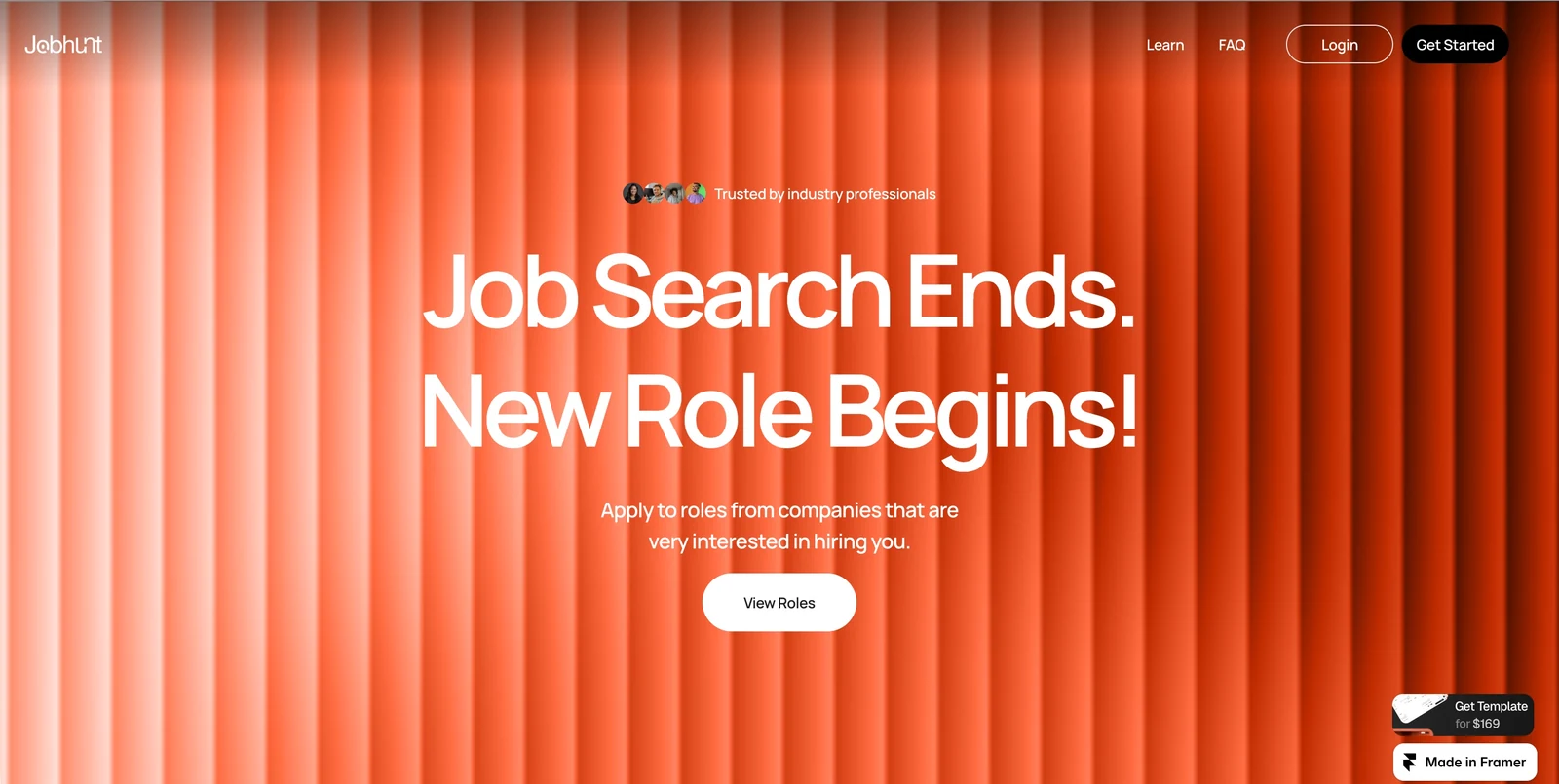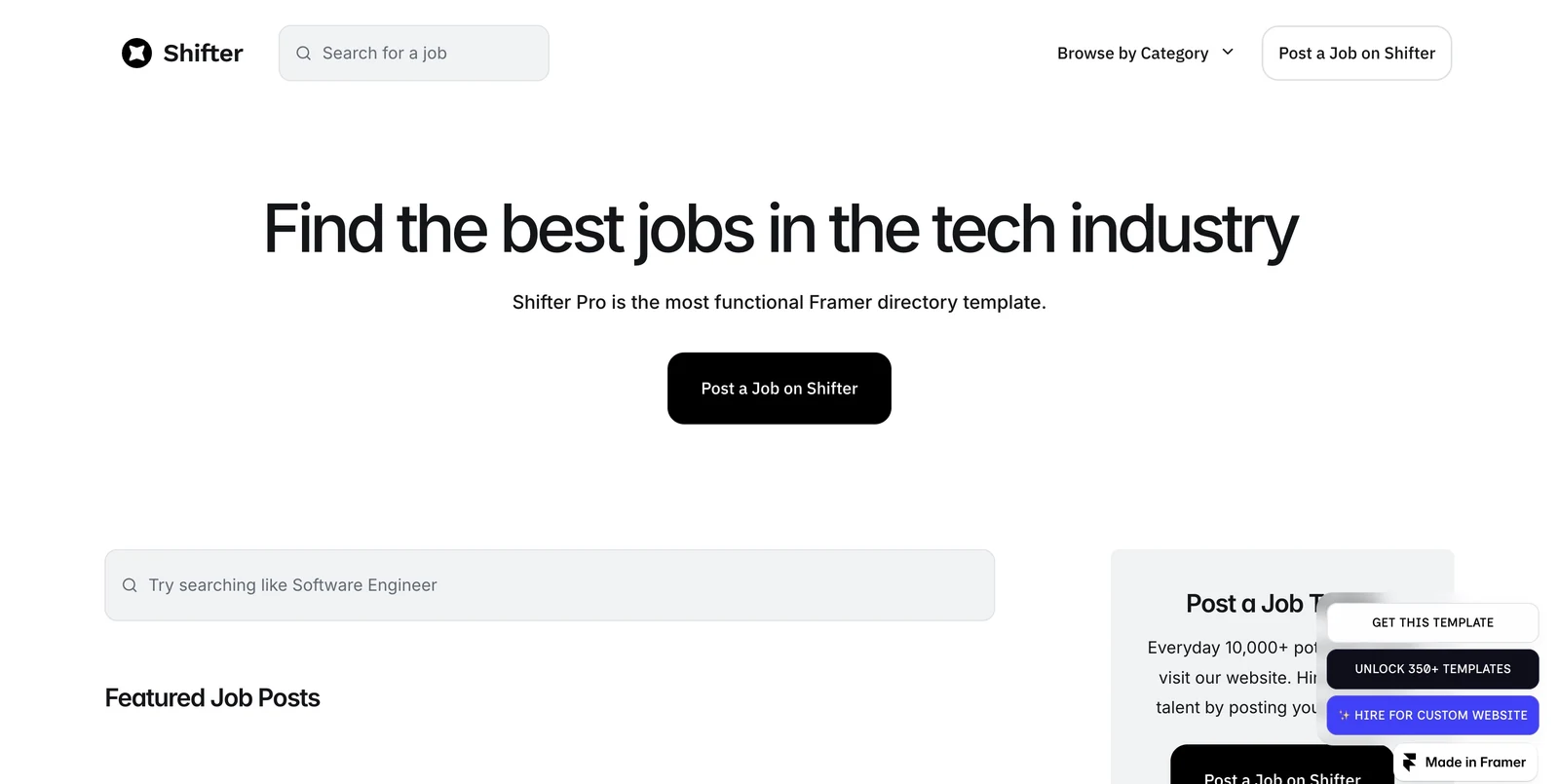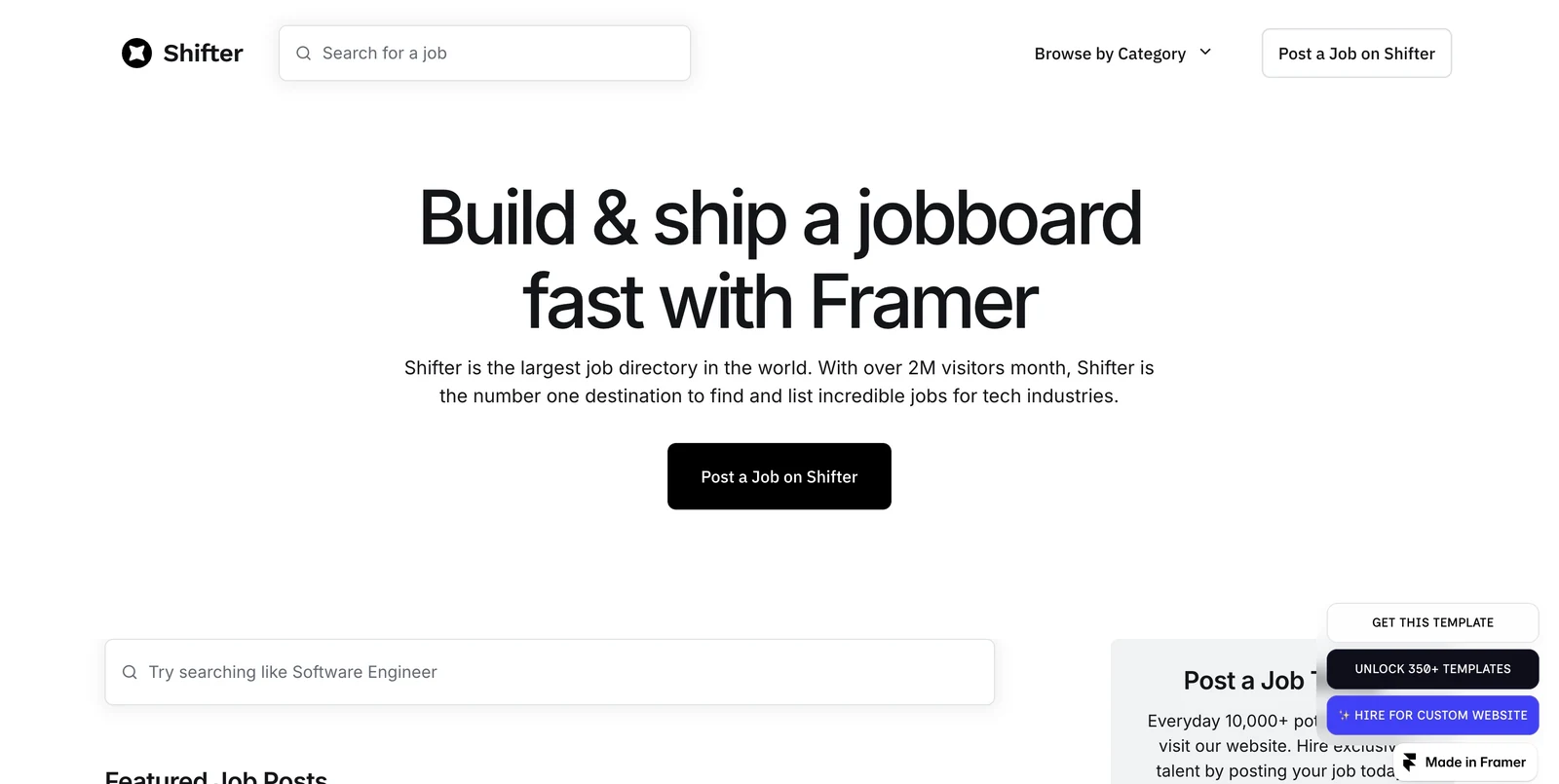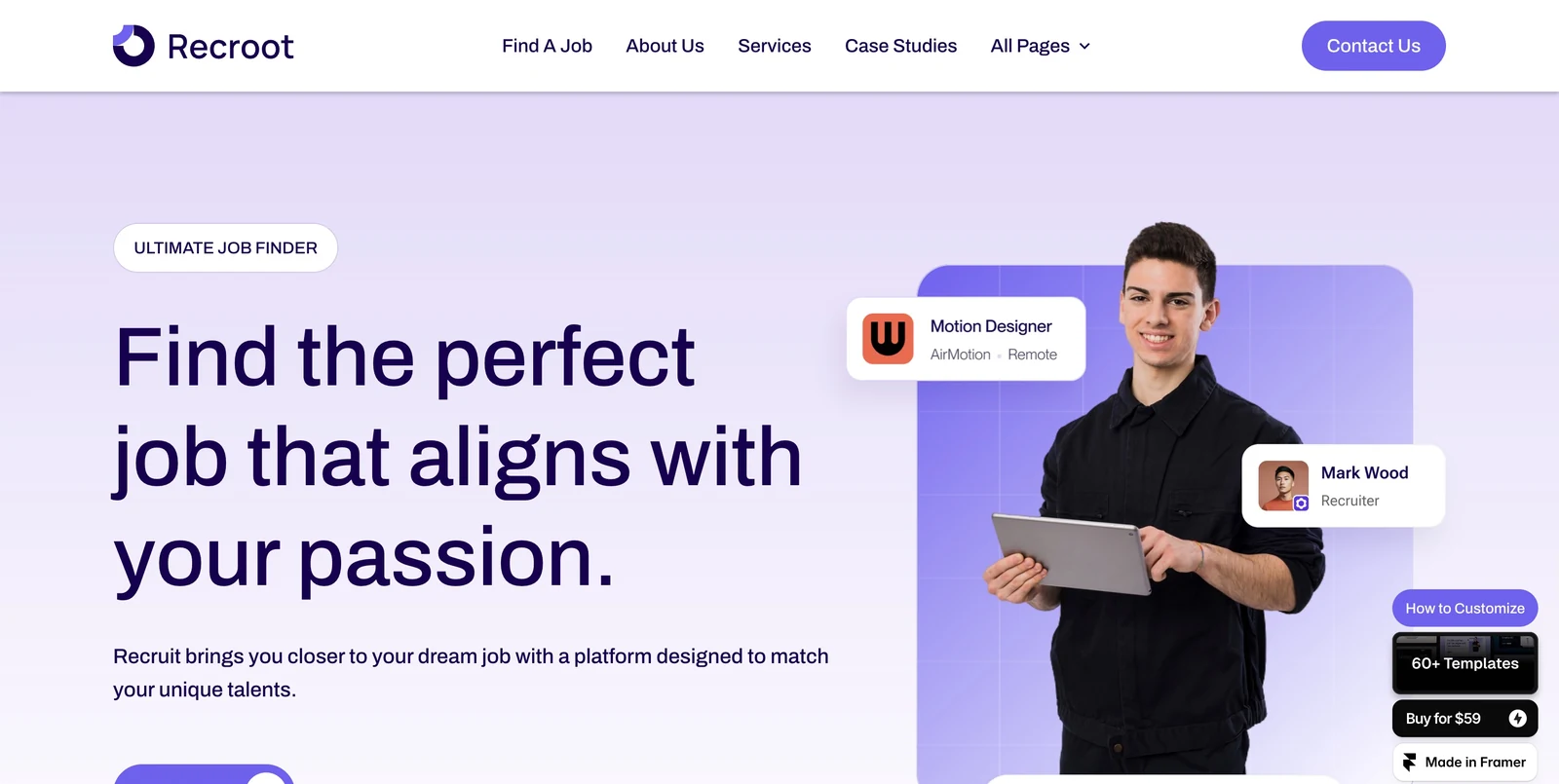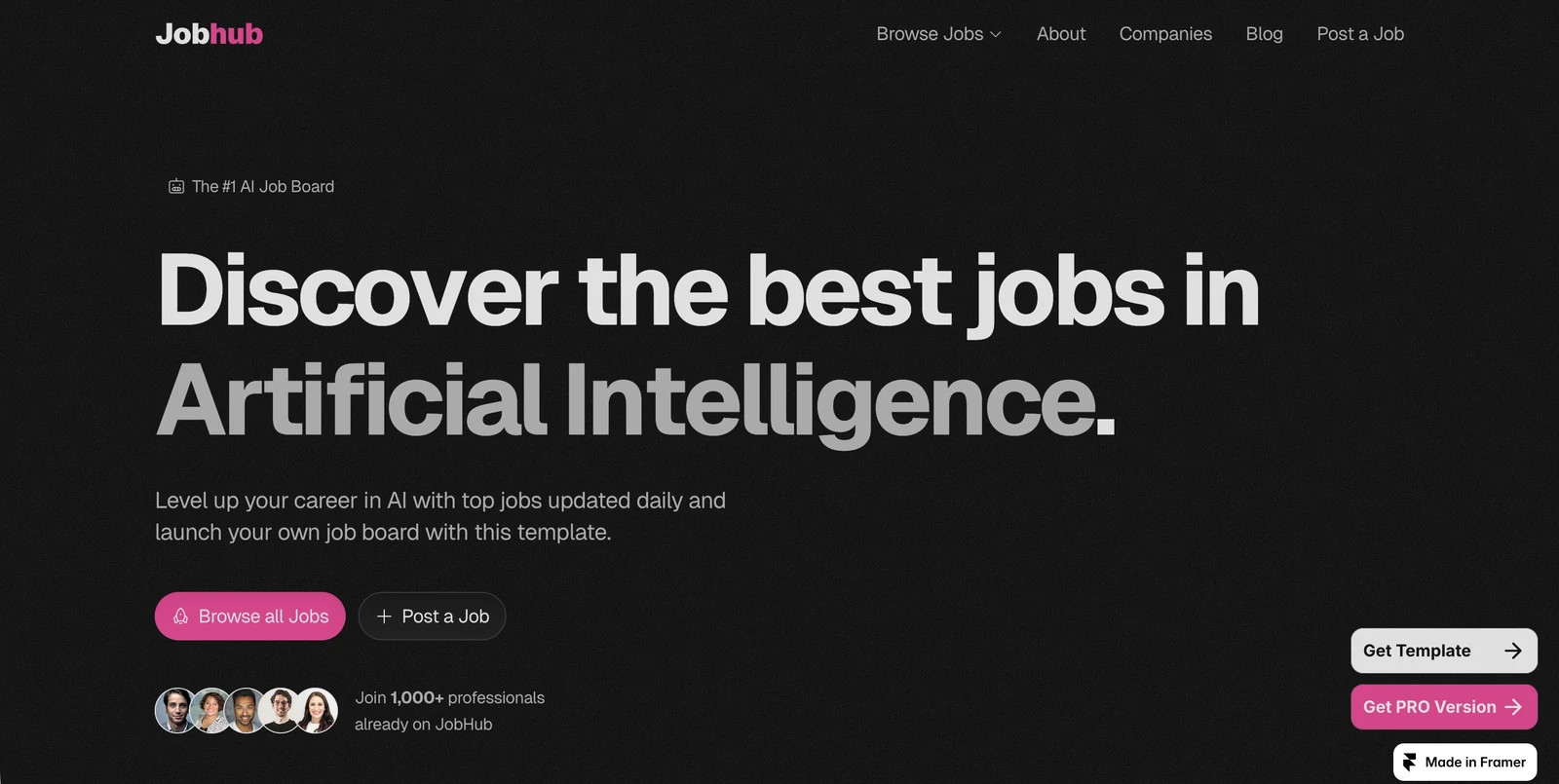
Jobhub organises a job board through Framer CMS collections. Vacancies, companies, categories and locations each have a place in the site structure, giving editors a framework for building a catalogue that visitors can browse from several directions. A reader might start with a location, explore a company or move from a broad category to an individual opening. The template includes index and detail pages to support those paths. That structure is useful for niche boards whose readers already know something about the kind of work they want, even when they do not arrive with a precise job title in mind.
The editor’s work happens inside Framer. Listings and related content can be maintained through the CMS, while styles and layouts are adapted in the visual design environment. The template’s responsive presentation gives the project a foundation across screen sizes, and its editable appearance allows the operator to establish a recognisable identity.
A location page and a company page answer different questions. The former helps readers explore where they could work; the latter gives them a way to examine one organisation’s opportunities. Maintaining those relationships in the CMS means a Jobhub project can be designed around several useful entry points rather than depending entirely on its homepage.
Jobhub also includes a blog. For a specialist publisher, that creates space for practical advice, sector information or explanations of the board’s scope alongside the vacancy catalogue. Those pages can help readers understand what belongs on the site and why it is relevant to them. As a Framer template, Jobhub supplies a content structure and visual starting point. The operator still needs to decide how submissions, applications and employer relationships should work within the wider project, then configure the appropriate workflow around that design.